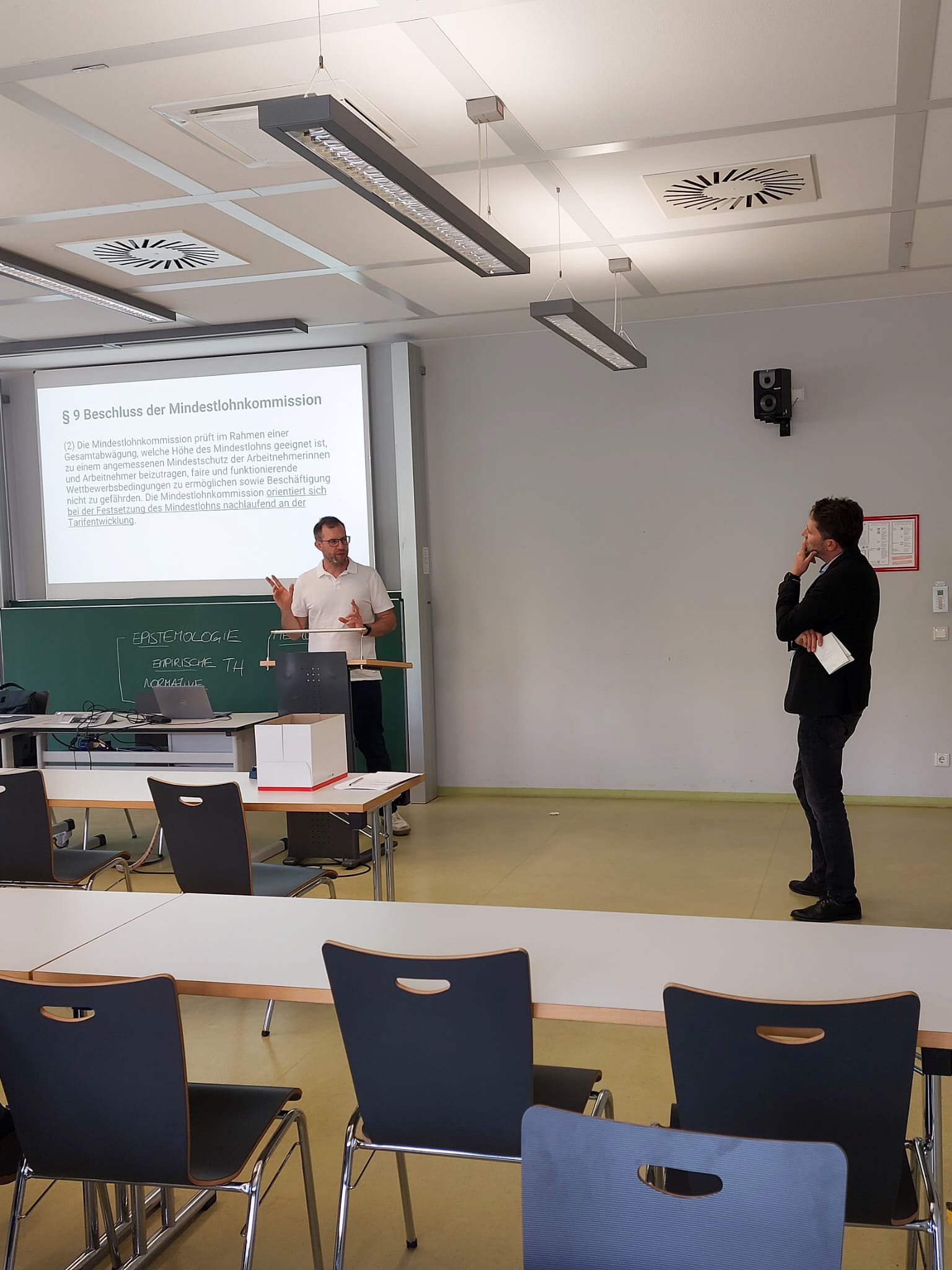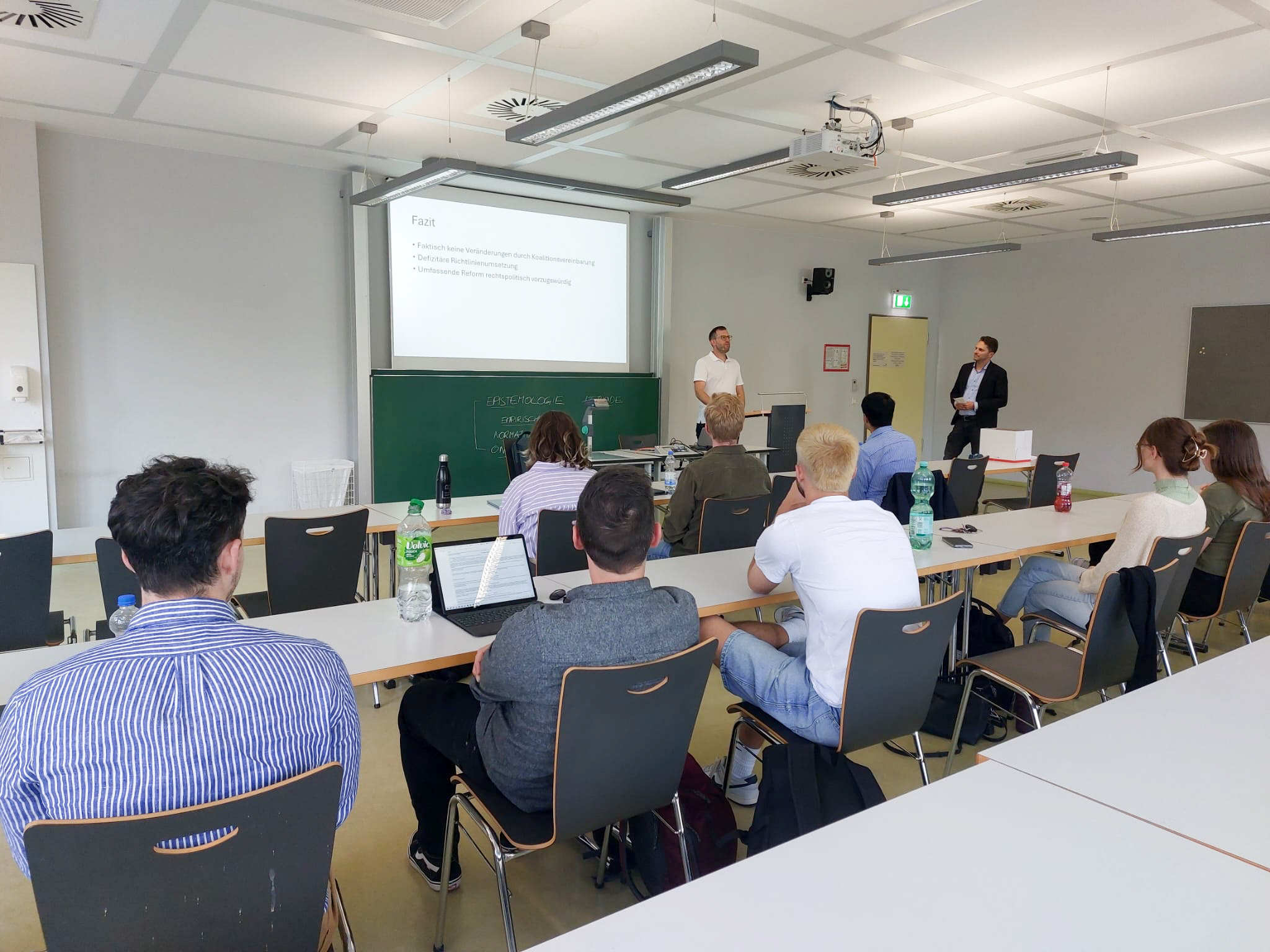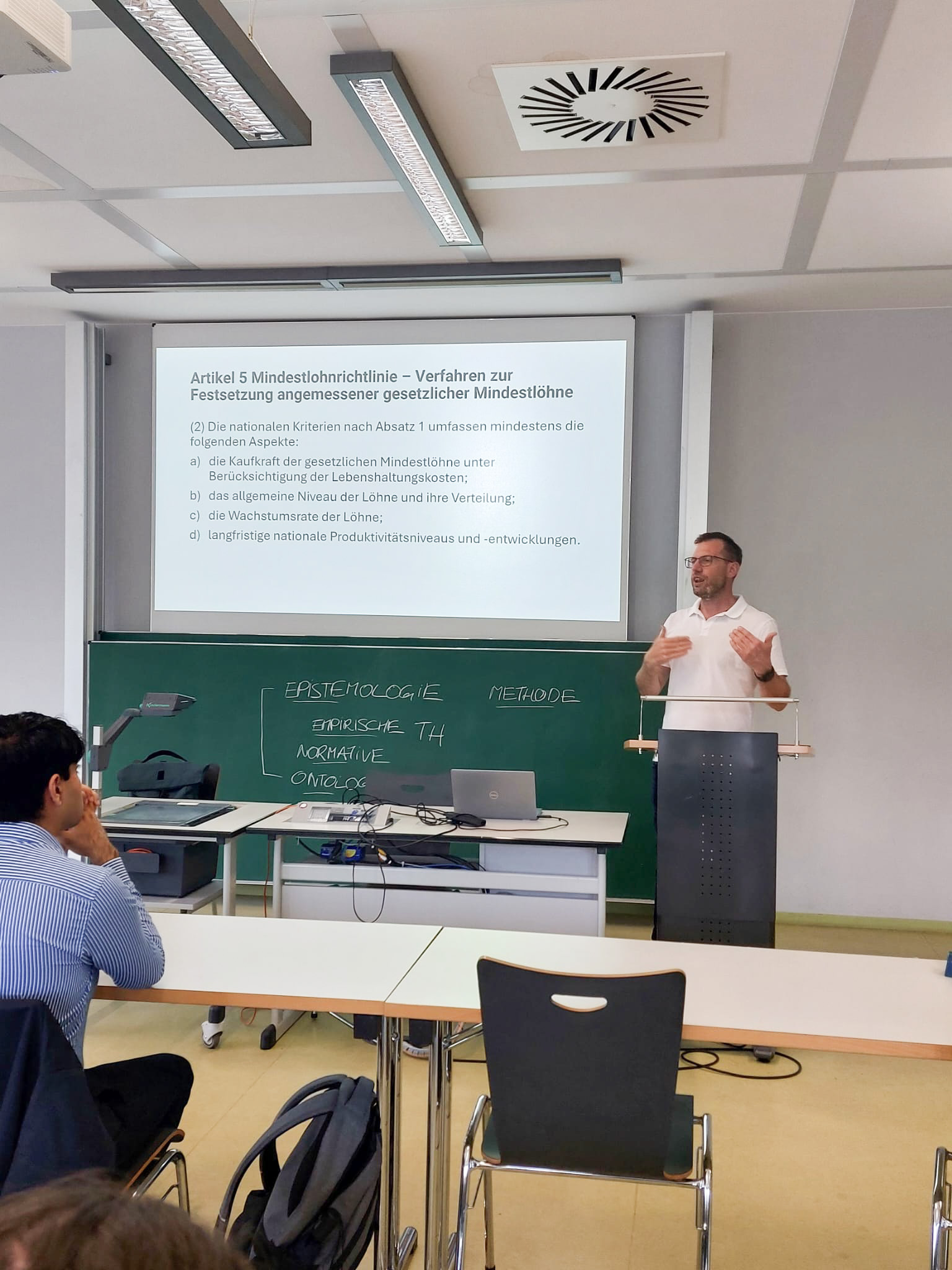
On June 10, the first IAAEU Trialogue took place with our guest Prof. Dr. Thomas Klein on the topic of “Minimum wage policy between Brussels and Berlin: The coalition agreement in light of the minimum wage directive.”
In the future, the IAAEU will host a series of lectures on current political projects relating to labor law and labor relations in the European Union.
The EU Minimum Wage Directive (EU Directive 2022/2041) is currently being heard before the European Court of Justice (ECJ). This was prompted by an action for annulment brought by Denmark in early 2023. The Danish government fears that the regulation could potentially undermine national wage-setting systems. Advocate General Emiliou has also endorsed this view, which is why the directive could now be on the verge of being overturned.
Prof. Dr. Thomas Klein commented in particular on the implementation of the directive and the problems of minimum wage determination in Germany. He noted that it is particularly striking that the German Minimum Wage Commission's procedure is not conducted on an equal footing because the trade unions have no leverage at their disposal. In addition, he said, the national implementation of the directive has considerable shortcomings, which the current coalition agreement does not promise to remedy.
Prof. Dr. Thomas Klein therefore advocates a comprehensive reform of the German minimum wage system. During the discussion, other interesting aspects were shared and discussed, such as how trade unions could be given greater influence over minimum wage setting.